
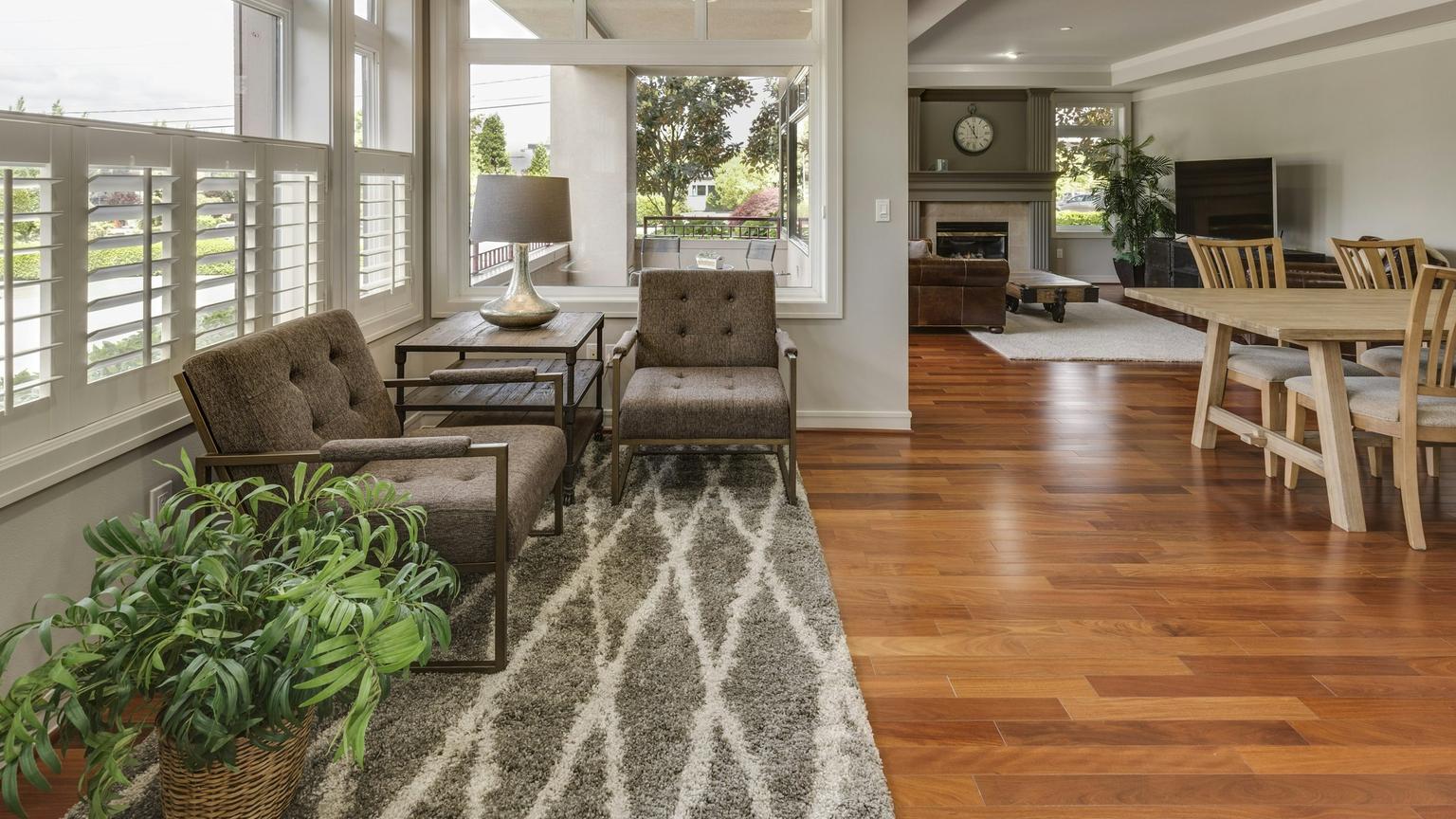
Before you pay to have your floors sanded, find out whether they need it.
That's the advice we give most often on hardwood calls around McKinney, and it saves people real money. A floor that looks gray, cloudy, or flat in the afternoon light often has a perfectly good finish under a layer of grime and old product. Refinishing would fix the look, but so would a proper cleaning, at a fraction of the cost, with no week of living out of boxes, no dust, and no fumes. Our hardwood floor cleaning in McKinney, TX is built around answering that question honestly on the first visit and then doing the cleaning if cleaning is the answer.
Sometimes it isn't. We'd prefer you hear that from us before we take your money.
Two kinds of wood floors in this town
McKinney has an unusual mix. The houses around Historic Downtown McKinney and the older blocks north and east of the square include homes with original solid oak, some of it sanded and refinished more than once over the decades. Those boards are thick and forgiving. They can take firm mechanical cleaning, and if they ever do need sanding, there's usually wood left to sand.
Then there's everything built in the last twenty years or so, which is most of Stonebridge Ranch, Craig Ranch, Tucker Hill, and Adriatica, plus the newer neighborhoods spreading through Prosper, Celina, Melissa, Anna, and Princeton. Much of the wood in those homes is engineered plank: a real hardwood wear layer glued over a plywood core. It looks like solid wood and it's a good product, but the top layer can be thin. Some engineered floors can be lightly sanded once. Some can't be sanded at all without burning through to the core.
That difference shapes everything about how we clean. On a thin engineered floor, cleaning is the only maintenance the floor will ever get, so it has to be done gently and with very little water. On old oak we have more room to work. Either way, the first few minutes of the visit go to figuring out which one we're standing on.
Quick ways to tell if cleaning will fix it
You can do a rough version of our assessment yourself. These checks aren't perfect, but they point in the right direction:
- Pick the dullest spot on the floor and put a few drops of water on it. If the water beads up, the finish is still there and protecting the wood. If it soaks in and darkens the board within a minute or so, the finish has worn through in that spot.
- Lift the edge of an area rug that's been down for a while and compare the wood underneath with the open floor next to it. A big difference in shine with the same color usually means buildup on the traffic side.
- Look at where the dullness sits. If it follows the walking paths, from the kitchen to the back door or down the hallway, it's often wear or grime in the finish. If it's patchy and random, a past product is the usual cause.
- Run a fingernail across your worst scratch. If the nail doesn't catch, the mark is likely in the finish or the buildup and may clean up. If it catches, the scratch is in the wood.
- Wipe a small area with a damp white cloth and look at the cloth. Gray or brown means there's soil sitting on top of the finish.
If the water beads, the scratches are shallow, and the cloth comes back dirty, you are a strong candidate for a cleaning. If the water soaks in across large areas or the boards are gray and dry, the finish is gone and the floor needs a refinishing company. We clean floors. We don't sand, stain, or apply new finish, and we don't repair boards.
What usually causes the haze
Most of the dull floors we see are the result of trying hard. People buy the shine-restoring products from the grocery store, which put down a polish that builds up coat after coat and eventually turns cloudy. Steam mops push heat and moisture into board seams. Spray-and-mop systems leave a sticky film that holds onto every bit of grit tracked in from the yard, and here that grit is often fine dust from the Blackland Prairie clay, which is very good at scratching a finish when it gets ground underfoot.
The combination of all three is common, and the result is a floor that gets duller every time it's cleaned.
The cleaning itself
We start by removing loose grit with dry methods. This sounds minor and isn't. Any wet cleaning over loose grit turns it into sandpaper.
Next comes a pH-neutral cleaning solution, matched to the finish and the wood. It's plant-based and free of the waxes and oils found in retail products. The machine puts down a measured amount, works it over the surface to break up the old polish and grime, and the dirty solution comes right back up so it doesn't sit in the seams. The floor is only damp for a short moment at any spot, and that's the whole point on engineered plank. Water is what makes boards cup and edges swell.
Rooms with heavy product buildup get a second pass. Kitchen floors in front of the range usually need it, since cooking oil settles there. When the cleaning is done, the floor dries quickly, usually within an hour, so sock feet are fine on it by the same afternoon.
We'll go over the floor with you at the end. Areas where the finish had already worn through will look cleaner, but they won't shine like the rest, and we'll show you where those are so you know what a future refinish would need to cover.
Keeping it that way
Once a floor is clean, the routine that keeps it clean is boring and cheap. Dry-mop or vacuum with a hard-floor setting a few times a week. Use a barely damp microfiber pad with a pH-neutral cleaner when you need to wet-clean. Skip anything that promises shine in a bottle, skip steam, and put felt pads on chair legs. Mats at the back door help a lot during the wet months when clay mud comes in on shoes and dogs.
Many McKinney homes pair hardwood in the main living areas with tile in the kitchen and carpet upstairs, and we can do all three in one trip. See our tile and grout cleaning and carpet cleaning pages, or our area rug cleaning if a rug sits on the wood, since we clean those right in your home too.
Our 100% satisfaction guarantee covers hardwood the same as every other surface, and Safe-Dry has more than 30 years behind it.
Schedule a visit
Call 469-207-3088 or pick a time online. We're available 24/7 and serve McKinney, Prosper, Celina, Anna, Melissa, and Princeton. Take a look at the coupons page for current savings before you book.
Still on the fence about sanding? Safe-Dry's hardwood-only site has a longer piece that walks through deciding between a deep clean and a full refinish, with more detail on the water test and what each result means for your floor.