
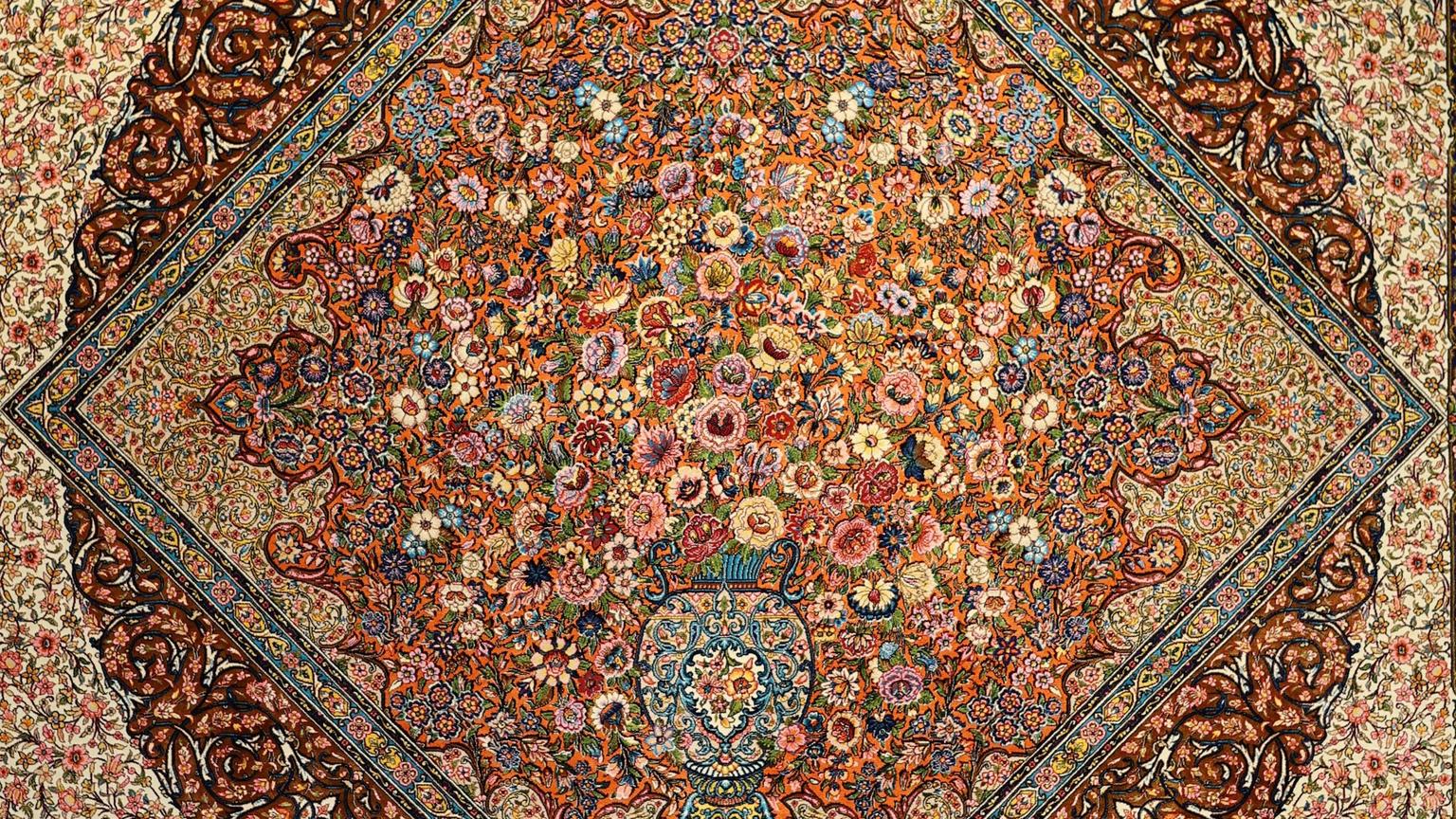
A lot of the Oriental rugs we see in McKinney came here from somewhere else. A grandmother's rug made the trip from Ohio when the family moved down for a job. A Persian bought overseas decades ago spent years rolled up in a closet, and now it finally has a room big enough in a house in Stonebridge Ranch. One rug traveled with a couple who bought one of the old houses a few streets off the downtown square and wanted something on the original wood floors that felt as old as the house.
The common thread is that people don't really know what they have, and they're nervous about having it cleaned. That's a reasonable worry. A hand-knotted rug with natural dyes can be damaged in a single afternoon by the wrong method. Too much water, too much heat, or a harsh detergent can make the colors run, shrink the foundation, or leave the wool brittle.
Our approach is to answer the questions people actually ask us before anything touches the rug. Here are the ones we hear most.
Is my rug actually handmade?
Flip over a corner and look at the back. On a hand-knotted rug, the pattern on the back is nearly as clear as the front, and if you look closely, the knots are slightly irregular. On a machine-made rug, the back is very uniform, sometimes with a stiff grid of backing threads. A hand-tufted rug usually has a canvas or latex backing glued on, which hides the knots entirely.
Then look at the fringe. On a hand-knotted rug, the fringe is the ends of the warp threads that run the length of the rug, so it's part of the structure. On many machine-made rugs, the fringe is sewn on afterward.
None of this is a value judgment. Plenty of machine-made Oriental-style rugs are handsome and worth caring for. It just tells us how the rug is built, and that changes how we clean it.
What's the worst thing that could happen?
Dye bleeding. Many older rugs were colored with natural dyes from madder root, indigo, and walnut, and some of those colors aren't fully set. Soak them and the reds can wander into the ivory field. Once that happens, it's very hard to reverse.
Shrinkage and distortion come next. Wool knotted on a cotton foundation reacts to water and heat differently than the cotton does, and a rug that gets saturated and then dries unevenly can ripple, buckle, or pull out of square.
And there's residue. Detergents left in wool make it feel stiff and pull in new soil fast. A rug cleaned with soap often looks dull again in a few months.
How do you keep that from happening?
By keeping the water low and checking before we commit. Every Oriental rug cleaning starts with these steps, in this order:
- We identify the fiber, which is usually wool but sometimes silk, cotton, or some mix of them.
- We check how the rug was made, using the back, the fringe, and the edges.
- We test each main color in an inconspicuous spot to see whether it moves. If any color looks unstable, we change the plan or tell you the rug shouldn't be wet-cleaned at all.
- We look for existing damage like moth trails, worn spots, loose fringe, or frayed edges, and point it out to you before we start so nobody's surprised later.
- We remove the dry soil. Older rugs can hold a startling amount of fine grit deep in the knots, and in Collin County much of it is dried Blackland clay. This step does more to extend a rug's life than anything else we do.
Only then does any cleaning solution go on. We pre-treat spots with wool-safe, plant-based products, then use our carbonated, low-moisture clean to lift the remaining soil without soaking the foundation. There's no soap, no detergent, and no heat. The pile is groomed in its natural direction so it dries even, and in most cases the rug can be walked on in about an hour.
Does the climate here matter?
More than people expect. North Texas swings from humid spring storms to dry winter weeks with the heat running. Wool takes on moisture from the air and gives it back, and that constant swelling and drying is mostly harmless. The trouble comes from what rides along with it. Cedar pollen in winter, ragweed in fall, and the fine dust that blows off bare construction lots around Celina and Princeton all settle into the pile. If a room sees direct afternoon sun, those fibers are also fading a little each summer.
Older rugs that sat in storage before coming to Texas sometimes carry their own problems: moth eggs in the wool, mildew from a damp basement up north, or just decades of dust. If yours spent years rolled up somewhere, tell us when you call so we can look for those signs first.
Will the rug leave my house?
It won't. We clean Oriental rugs right in your home. You won't wait two weeks for a delivery truck or wonder how your rug is being handled in a warehouse. You can watch the whole process if you want, and plenty of people do.
Is there anything you won't do?
Yes, and we'd like you to hear it from us before booking. We clean rugs. We don't repair them. Reweaving a moth-eaten section, rebuilding a worn fringe, securing an unraveling edge, or replacing a missing piece of the field is craft work for a rug restorer, and we'll tell you if we think your rug needs one.
We also won't wet-clean a rug whose colors fail the dye test. In that case we'll tell you honestly, and do only what's safe, like dry soil removal.
Silk is the other careful case. A true silk rug, or a wool rug with silk highlights, gets a lighter touch and less agitation, and we'll talk through the realistic results with you before we start.
How often should it be cleaned?
In a quiet formal living room, every eighteen months to two years is usually plenty. If the rug sits under a dining table, in an entry, or anywhere a dog naps, every year is better. Allergy sufferers will notice a difference if it's cleaned after cedar season, since the pollen that blows in from December through February settles deep in a wool pile.
Between cleanings, vacuum without the beater bar, turn the rug around every so often so one end doesn't take all the sun, and keep a good pad under it. That's most of what a rug needs.
Where we see these rugs
Oriental rugs turn up all over our area. They're on the tile floors of the Mediterranean-style homes in Adriatica, under dining tables in Tucker Hill, in the formal rooms off Virginia Pkwy and Eldorado Pkwy, and increasingly in new homes in Prosper and Celina, where people finally have a room big enough to roll out the rug they've been storing. We serve McKinney, Prosper, Celina, Anna, Melissa, and Princeton.
Rugs laid over bedroom or den carpet can share the appointment with carpet cleaning. If it's a newer machine-made piece, our general area rug cleaning page probably covers it better. Old pet accidents in a wool rug are a job for odor and stain removal.
The techs who work on these rugs are certified and insured, and our 100% satisfaction guarantee covers the job. You'll get a firm price after we've looked at the rug and before any work begins. Phones are answered 24/7 at 469-207-3088, or you can book online. The coupons page lists any rug offer we're running.